
 Brenda Herchmer is the owner of Grassroots Enterprises, a community development consulting company.
Planning in a World That Won’t Sit Still
 Each January brings a familiar shift — from “New Year, New You” hype to organizations being reminded they need to focus less on putting out fires and getting more strategic about fireproofing.
They’ve finally had a chance to breathe over the holidays, maybe reflect a little, and now they’re ready to plan.
It’s the time when boards, leadership teams, businesses, and community groups once again vow to pull everyone together, get aligned, and map out the future.
And they’re not wrong. Getting people in the same room—real or virtual—to talk about direction, priorities, and resources is still a smart move for any organization, business, or community. A shared sense of where we’re going and what it will take to get there is still essential.
Planning used to feel simpler
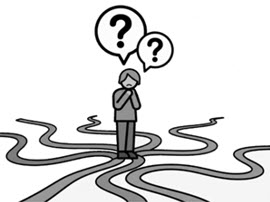
Once upon a time, planning felt pretty straightforward.
You started by getting a good handle on where you are. Then you decided where you want to go. After that, you laid out the steps needed to get from here to there. The plan evolved to address the gap between the current state and the desired future.
Even people who resisted planning because they “just wanted to get on with it” often admitted that a single focused day together left the team more energized, aligned, and committed to action.
So, the case for planning is still solid. The question now is not whether to plan, but how to plan in a world that looks very different.
The world won’t sit still.
Here’s where things get interesting.
The challenges organizations and communities face today are far more complex, interconnected, and fast-moving. We are dealing with multiple root causes, overlapping systems, and long timelines that cross sectors and jurisdictions. Symptoms show up quickly; real solutions take time, collaboration, partnership, and patience.
The old assumption—that the world would more or less behave if we created a clear plan and executed it faithfully—doesn’t hold up so well anymore. Complexity, uncertainty, and constant change mean reality rarely follows a single, linear script.
In other words, the world isn’t acting up; it’s just behaving like a complex system. We’re the ones who need to get better at planning for how it actually works.

Did we ever really have a fixed plan?
Somewhere along the way, many of us started acting as if the world had stopped following the plan.
But if we’re honest, reality didn’t suddenly go off-script. We were the ones who quietly retreated to our corners and stopped paying close attention to the bigger picture. Complexity felt overwhelming, so we narrowed our gaze to what was right in front of us and hoped the big systemic stuff would somehow sort itself out.
So maybe the better question isn’t, “Why won’t the world stick to the plan?” but “How do we design planning so we pay attention to what’s actually happening—and respond together instead of checking out?”
That’s where planning needs a serious refresh.
Planning as a living, shared practice
Research on happiness and wellbeing is clear: people do better when they feel connected to others, can influence decisions that affect them, and are confident in their ability to shape their own circumstances.
In other words, we are not doomed by complexity. But we are in trouble when we abdicate responsibility to “someone else”—government, business, or an anonymous “they”—and retreat from engaging with the system we live in.
So rather than treating planning as a one-time event that produces a glossy document, what if we treated it as an ongoing, participatory practice? One that helps people stay awake to what’s happening, stay connected, and stay engaged enough to act.
Three questions for meaningful planning
Whether you’re planning for an organization or an entire community, three simple questions can dramatically shift the quality of the conversation:
1. Are we providing real opportunities for stakeholders to influence decisions that affect them?
Not just “consulting” after decisions are essentially made, but inviting people into shaping direction, priorities, and approaches in ways that genuinely affect outcomes.
2. Are we facilitating regular, meaningful contact between stakeholders?
Complex challenges rarely sit neatly within one department, sector, or neighbourhood. People need structured, ongoing ways to connect across boundaries to build trust and work on shared issues over time.
3. Are we helping stakeholders build the confidence and capacity to exercise control over their circumstances?
That might mean skills, information, peer support, or structures that make it easier to experiment, learn, and adapt—rather than waiting passively for top-down fixes.
These questions don’t replace vision, values, or strategy. They make sure those elements don’t drift away from real people, real power, and real possibility.
Yes, still have a plan—just a better kind.
This doesn’t mean abandoning plans altogether. Clear vision, shared values, and strategic directions are still vital. They help us decide what to say yes to, what to say no to, and how to allocate our limited time, energy, and resources.
What needs to change is how those plans are created and lived. Less rigid script, more living roadmap. Less “we know the future,” more “we’re equipped to read the world and navigate it together.”
So by all means, book that strategic planning session. Bring the sticky notes, the whiteboards, and the coffee. But before you dive into vision statements and action items, start with this question:
“How do we make sure we don’t just write a plan—we stay alert, connected, and courageous enough that it will live in a world that won’t sit still?”
There’s little chance of the world sitting still—but with the right kind of planning, neither will we.
Posted on 12-31-25
Next entry: When Kindness Looks Like Leadership
Previous entry: Futures Thinking for Real People (a cape is optional)